Privacy-Compliant Customer Research: What You Can (And Can’t) Track
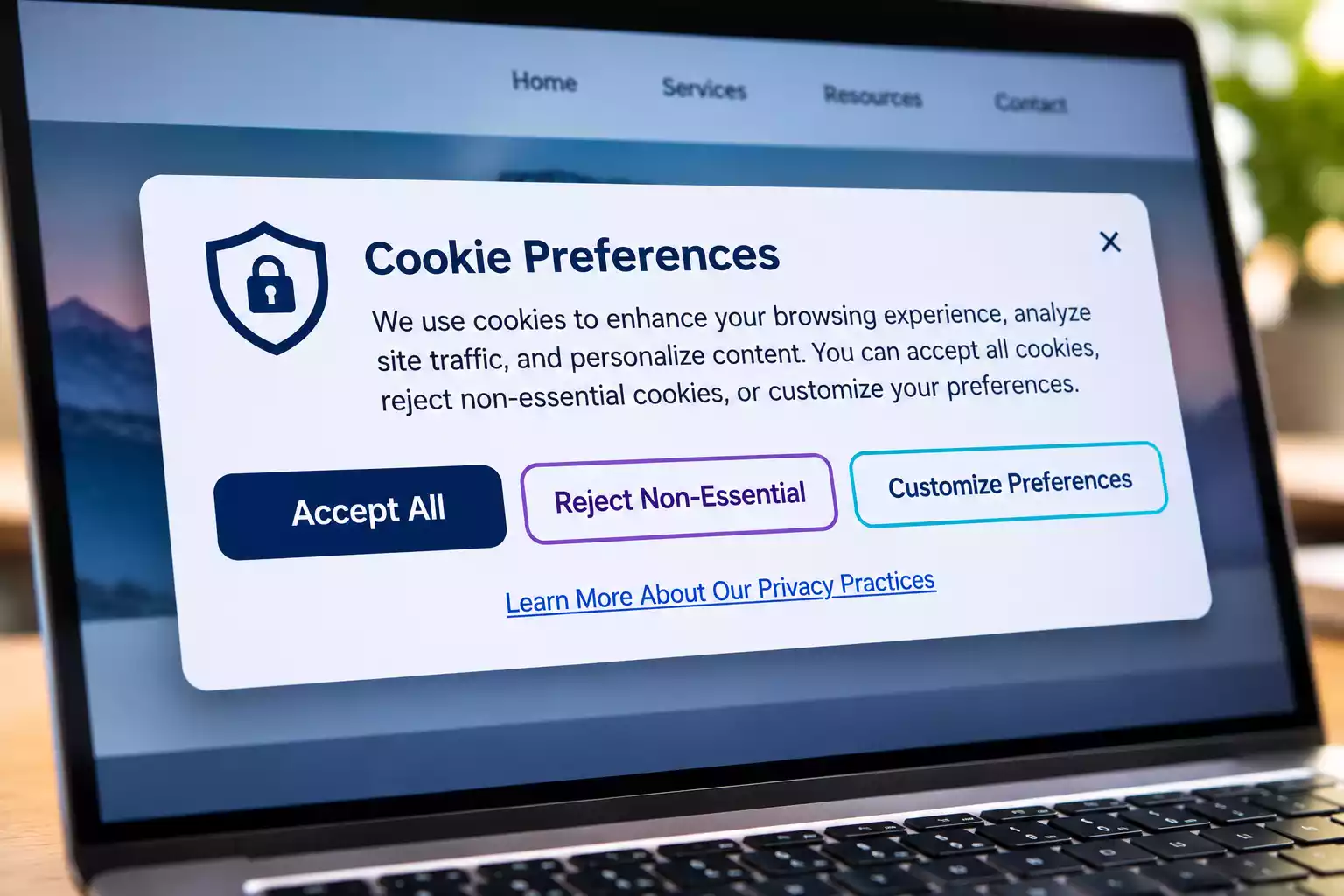
Customer research helps businesses understand how visitors find their websites, what content interests them, and where potential customers drop off. With the right data analytics tools, you can use these insights to improve your website and refine marketing campaigns. However, evolving data privacy laws mean businesses must understand what they can collect, how they use it, and when they need permission.
Columbus Web Company helps businesses balance useful customer insights with responsible tracking practices, including location-based cookie consent options.
What Customer Data Can You Collect Through Website Tracking?
Privacy regulations don’t prohibit all website tracking. Many analytics tools can still measure page views, traffic sources, engagement, and conversion rates. These insights help businesses identify successful pages, improve user experiences, and evaluate marketing performance.
Other tracking technologies, including advertising pixels, cookies, and session-recording tools, may collect more detailed information about browsing behavior. Depending on the data collected and how it’s used, these technologies may trigger additional requirements under applicable data privacy laws.
The key is understanding what each tool collects and why. Businesses should audit their analytics platforms and third-party scripts to identify unnecessary tracking and avoid collecting sensitive information without appropriate safeguards.
How Data Privacy Laws Affect Website Analytics and Tracking
There is no single U.S. privacy law that governs every business and website. Requirements vary by state, industry, business activities, and the types of information collected.
Some laws require covered businesses to provide notice and opt-out options for certain data uses, such as targeted advertising or the sale of personal data. Other activities may require consent. Certain states also require businesses to recognize qualifying universal opt-out signals, including Global Privacy Control.
These distinctions matter when configuring website analytics and advertising tools. A cookie banner alone doesn’t guarantee compliance. Businesses need to understand which rules apply to their operations and ensure their privacy disclosures and tracking settings reflect those requirements.
How Location-Based Cookie Consent Helps Manage Privacy
Website visitors in different states may have different privacy rights. Columbus Web Company can geo-target specific states with stricter cookie consent requirements and adjust consent options based on a visitor’s location.
For example, a website may be configured to keep certain cookies disabled until consent is provided or display relevant opt-out options based on applicable requirements. Location-based settings can help businesses deliver an appropriate consent experience without applying identical rules to every visitor.
Geolocation isn’t a substitute for legal review, and it doesn’t guarantee compliance. Location data can be imprecise, and some privacy obligations depend on factors beyond where a visitor is located. Businesses should account for these limitations and ensure their consent tools respect applicable preferences and opt-out signals.
Building a Privacy-Conscious Website Analytics Strategy
You don’t have to abandon customer research to protect visitor privacy. A few practical steps can help your business gather useful information responsibly.
 Start by auditing your website’s cookies, analytics tools, advertising pixels, and third-party scripts. Identify what each collects, remove tools that no longer serve a purpose, and limit data collection to what your business needs.
Next, review your consent management system. Make sure visitors can understand their choices, change their preferences, and exercise applicable privacy rights. If you serve customers across multiple jurisdictions, location-based consent options may help you accommodate different requirements.
Finally, review your privacy policy and data retention practices. Explain what you collect, why you collect it, and whether you share it with third parties. Revisit these practices regularly as your website and applicable laws change.
Make Better Marketing Decisions With Responsible Customer Research
An effective and ethical data analytics strategy should gather meaningful insights while respecting customer privacy. A thoughtful approach can help your business make informed marketing decisions and provide visitors with greater transparency and control.
Columbus Web Company can help you evaluate your website’s tracking setup, implement location-based cookie consent options, and develop a digital strategy that accounts for evolving data privacy laws.
Need a more privacy-conscious approach to website analytics? Contact Columbus Web Company to discuss your website’s tracking and consent management needs.